Associazione Culturale by Fragranza di Sicilia


Address
Via Tommaso Fazzello 6B-C
Taormina ME 98039, Italy
Contacts
Our Social Media
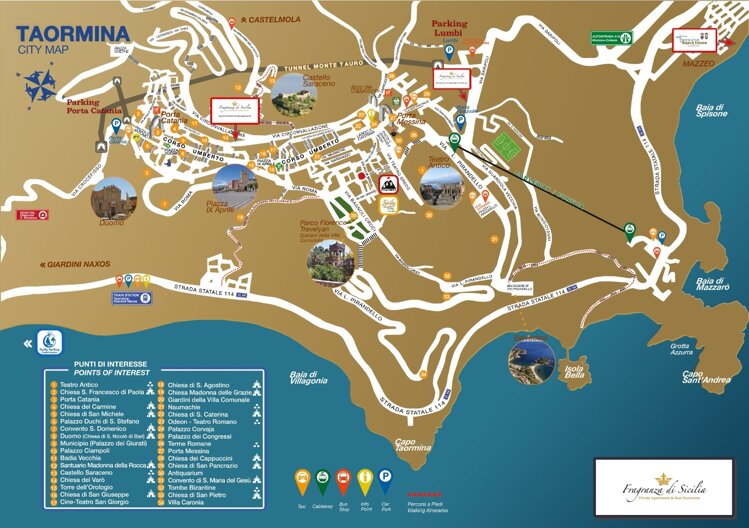
What to see and points of interest:
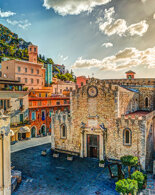
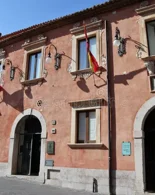
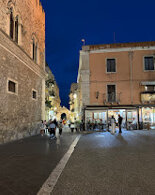
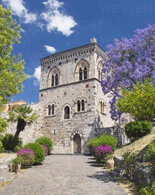
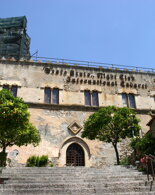
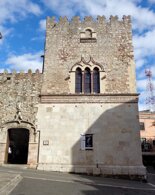
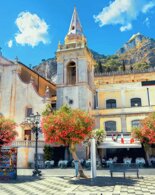
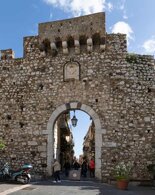
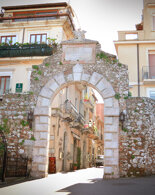
Castello Saraceno - Castello di Taormina
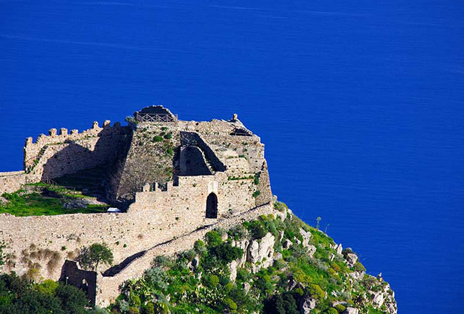
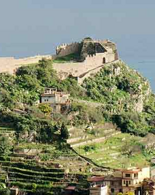
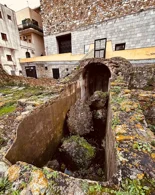
Castello di Monte Tauro (also known as the Arab-Norman or Saracen Castle) sits high above Taormina at 397 meters, offering sweeping views of the Ionian coast, Mount Etna, and the surrounding valleys. Built on a strategic acropolis used since Greek and Roman times, the fortress played a key defensive role through Byzantine, Arab, and Norman periods. Though now partly in ruins, its remaining walls, tower, and ancient structures still reflect its military importance and make it a scenic and historic viewpoint.
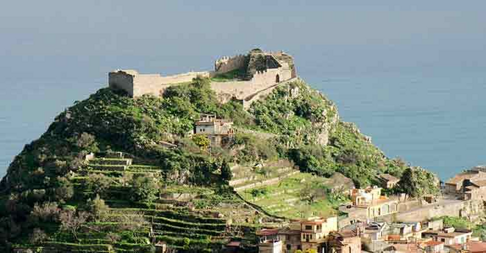
Castello Saraceno in Taormina, located on Monte Tauro, is open daily (typically 10:00 AM – 8:00 PM in summer, closing earlier in winter) for a fee of €10, often including a digital audioguide. Tickets are available online or on-site, offering access to 11th-century Arab-Norman ruins and panoramic views
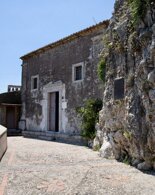
Although not located in the heart of Taormina, Chiesa della Madonna della Rocca is well worth a visit—if not for the church itself, then for the breathtaking views along the path that leads to it. The trail begins on Via Crucis, also known as Salita Castello, just off Via Circonvallazione. This “Way of the Cross” depicts the events of Christ’s Passion, offering both a spiritual and scenic journey.
According to modern accounts, Monsignor Giovanni Di Giovanni recounts that the church was founded around 1640 by Abbot Francesco Raineri.
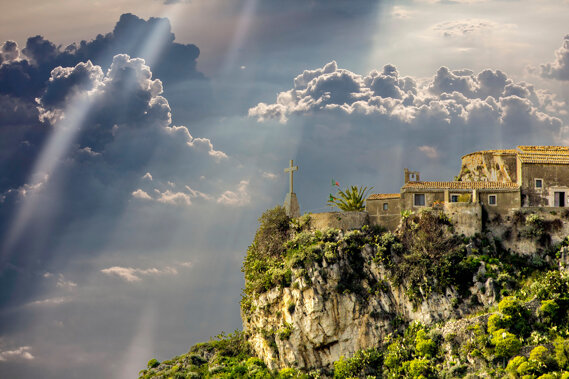
The church is open for services every third Sunday of the month at 9:30 and welcomes visitors during operating hours of 9.30 – 12.30 (Winter time) 9.30-12.30 and 16.00 – 19.30 (Summertime).
Yet, historical records suggest an earlier origin: the 12th-century Arab geographer Edrisi notes that the sanctuary was built at the behest of the court of Roger II, the first Norman king of Sicily. This indicates that the church of Santa Maria della Rocca may indeed date back to the 12th century, with Raineri later restoring and rebuilding it after more than five centuries of neglect. He is also believed to have added a small monastery, which has long since fallen into abandonment.
Near the edge of the clearing by the church stands a large reinforced concrete cross, erected in 1930 during a mission by the Redemptorist Fathers. Facing east toward Taormina, it is illuminated at night, making it visible from every direction.
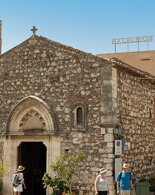
Built in 1330, the small Church of Saint Anthony Abbot stands on the southern edge of the town, near the ancient city walls. Dedicated to the patron saint of animals, it reflects a long-standing tradition still celebrated each year on January 17th with the blessing of animals.
The church is a simple, single-nave rural chapel, originally serving the local community. Its architecture blends Gothic, Baroque, and Byzantine elements, highlighted by a distinctive limestone portal, decorative leaded windows, and a small bell tower.
After being heavily damaged during the 1943 bombing, it was carefully rebuilt using its original stones. Inside, the church houses a statue of Saint Anthony Abbot and, since 1953, a remarkable permanent nativity scene depicting scenes and monuments of Taormina.
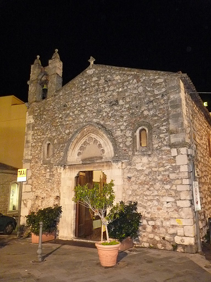
Opening hours: from 9:30 AM to 8:30 PM
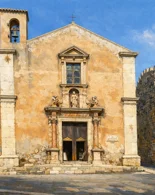
The Church of Saint Catherine of Alexandria was built in the early 17th century, following the sale of an older church outside the city walls to the Capuchin friars in 1610. Local noble families funded the construction of the new church within the walls, likely completed in the first half of the 1600s.
Built over the remains of a Roman Odeon and a possible earlier Greek temple, the church reflects a rich historical layering. Its Baroque architecture is highlighted by an ornate marble portal, decorative sculptures, and a statue of Saint Catherine above the entrance, created in 1705.
Inside, the single-nave interior features detailed altars, paintings, and an earlier statue of the saint dating back to 1493. A crypt and ancient remains uncovered during restoration further emphasize the site’s historical significance.
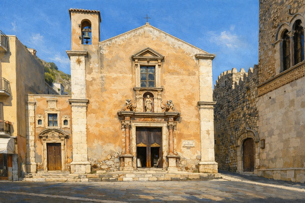
Opening hours: from 9:00 AM to 8:00 PM
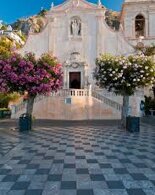
The Church of Saint Joseph stands prominently in Piazza IX Aprile, next to the Clock Tower, and was built in the late 17th century in a rich Baroque style. Its most striking feature is the grand façade, reached by a unique double staircase with an elegant stone balustrade, creating one of the most scenic views in Taormina.
The church’s exterior is richly decorated with marble details, statues, and symbolic elements linked to the Confraternity of the Souls in Purgatory, including motifs of flames and skulls. Inside, the single-nave layout is adorned with elaborate stucco work, paintings, and a central dome.
The interior features ornate altars made of local marble, statues of saints, and a crypt beneath the floor. A bell tower, added in the early 18th century, stands beside the church, completing this remarkable example of Sicilian Baroque architecture
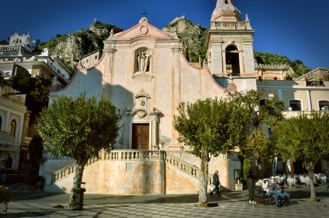
Opening hours: from 9:00 AM to 8:00 PM
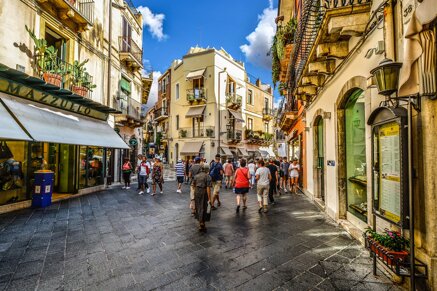
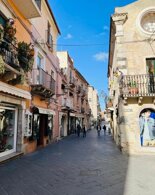
Known as the Main Street of Taormina, Corso Umberto cuts through the very heart of this ancient city. Starting from the Arch of Porta Catania (South) it runs for approximately 800 meters until it reaches the Arch of Porta Messina (North). Corso Umberto is where you will find the pulse of this city. As you stroll along the narrow street you will be able to see much of the ancient history, the art, and influences of many past dominations (Arab, Norman, Greek, Roman, etc.) as well as the very exclusive shopping in Taormina, the boutiques, and restaurants.
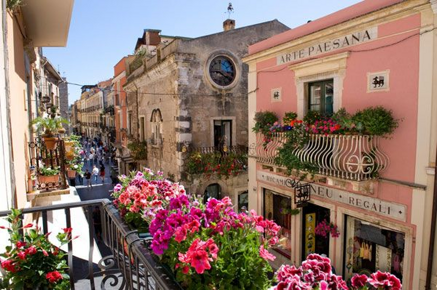
History of the Basilica of Taormina
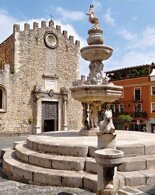
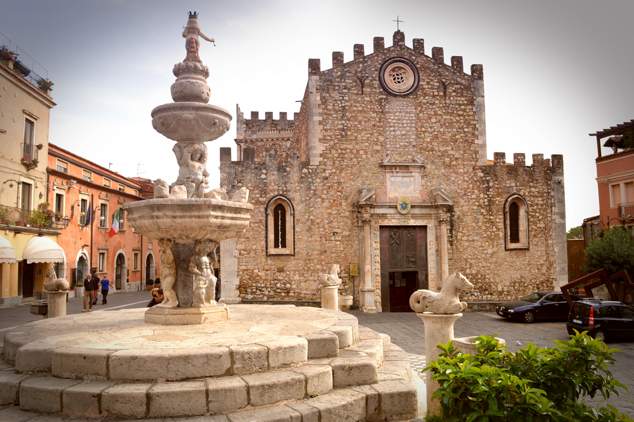
Dedicated to Saint Nicholas of Bari, the Basilica of Taormina dates back to the 13th century and stands on the remains of an earlier medieval church. Over the centuries, it was rebuilt and modified, particularly during the 15th, 16th, and 18th centuries. In 1980, it was granted the title of Minor Basilica by Pope John Paul II.
The church features a Latin cross layout with three naves and three apses. Its interior is supported by marble columns—some believed to come from the ancient Greek Theatre—and is enriched with finely crafted wooden ceilings combining Gothic and Arab influences. Notable elements include Baroque and Gothic chapels, ornate portals with religious carvings, and decorative rose windows.
Externally, the basilica retains the appearance of a fortified medieval church, with battlements and a massive bell tower added in the 18th century. A major restoration between 1945 and 1948 revealed its original architectural features and preserved its historical character.
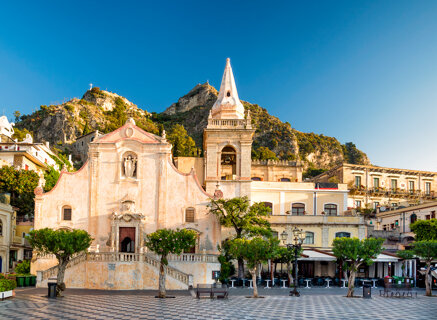
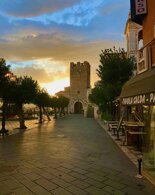
Piazza IX Aprile is a panoramic square in the heart of Taormina, known for its lively atmosphere, beautiful architecture, and great people-watching. It’s a popular spot for aperitivo, surrounded by cafés and bars.
The piazza is also home to notable churches like Church of San Giuseppe, a Baroque church with ornate stucco interiors, and Church of Saint Augustine, originally built in 1486 and now used as a library and exhibition space.
Isola Bella
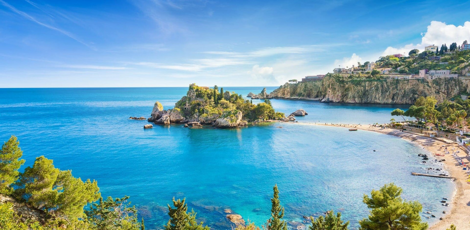
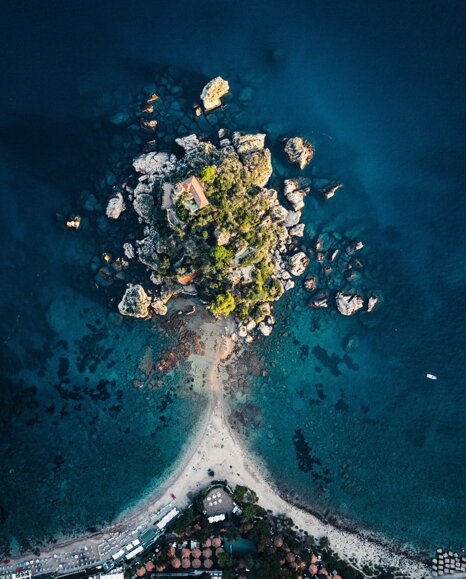
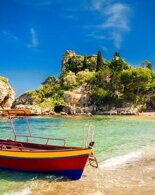
ISOLA BELLA, a marine natural reserve, is a great place for snorkeling and scuba diving but also an amazing place for sightseeing as it is the home of the Naturalistic Museum. It is possible to visit the museum on the island for a small entrance fee. Access is only available during the seasonal months. The area offers restaurants and beach clubs where you can rent umbrellas and chairs as the rocky beach is not very comfortable for sunbathing. The bars and restaurants offer local seasonal cuisine, mainly seafood and pasta dishes. It is possible to reach Isola Bella by a leisurely 35-45-minute walk, by car, cable car, or even by bus (Interbus from the bus terminal). The cable car is the fastest way, but the walk down is especially recommended for the view of the bay as you pass the panoramic Terrace Belvedere. The entrance to the trail that leads to the coast road SS114 can be found on the left side of the Belvedere lookout point. After the descent of almost 700 stairs, a small landing with a fountain can be seen. Proceed another 200 stairs or so down, and the pebbles of Isola Bella will be at your feet.
The Roman Odeon of Taormina
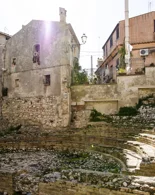
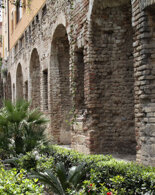
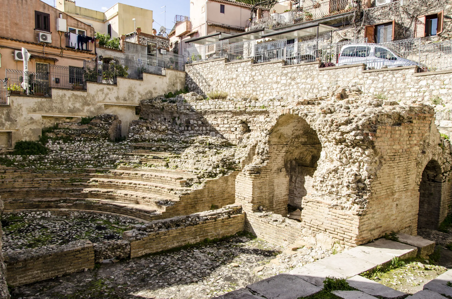
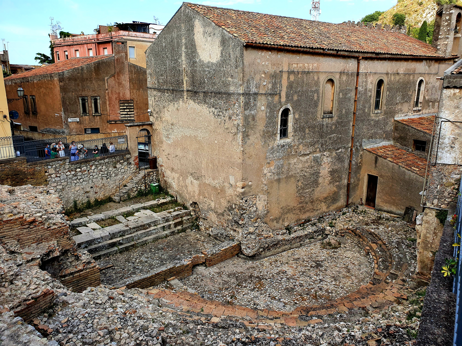
Built in the 2nd century AD, this intimate "small theater" is a hidden archaeological treasure located in the heart of Taormina. Unlike the city’s famous Great Theater, the Odeon was a covered venue reserved for elite musical performances and political gatherings. Seating roughly 200 people, the red-brick structure sits atop the ruins of an ancient Greek temple and remained hidden until its discovery in 1892. Today, it offers a peaceful, free-to-visit glimpse into the city’s imperial history.
Palazzo dei Giurati – The Administrative Heart of Taormina
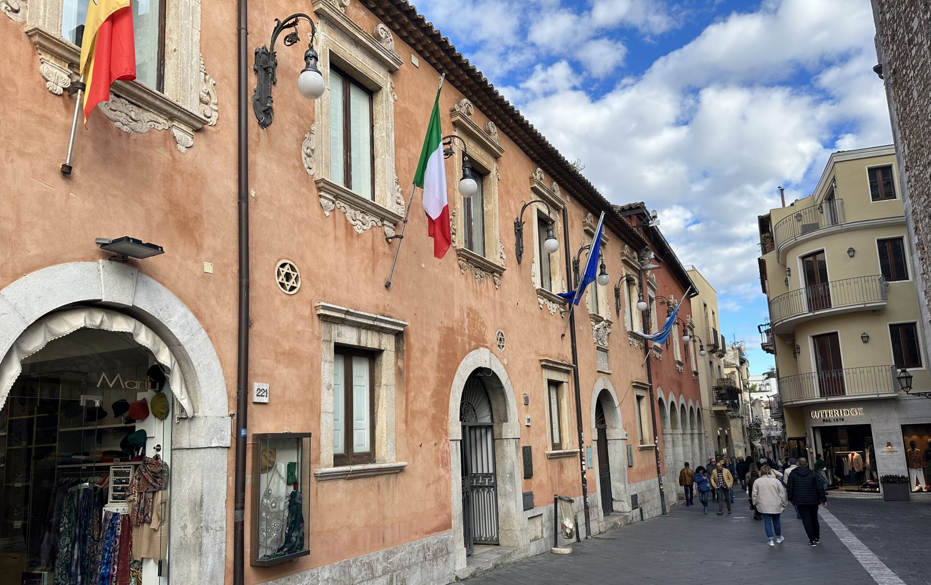
Located in Piazza Duomo, the Palazzo dei Giurati is an elegant example of Sicilian Baroque civil architecture. Originally built in the 1700s on the remains of the ancient Jewish quarter, the building features a stunning facade made of local Taormina stone that overlooks the main street. A distinctive feature of the exterior is the decorative carvings which include historical symbols, such as the Stars of David, reflecting the city's diverse cultural layers.
Today, the palace houses the offices of the Taormina Town Hall and serves as a landmark for visitors exploring the historic center, situated just steps away from the Cathedral.
Piazza Vittorio Emanuele II is one of the most historically significant squares in Taormina, serving as the gateway to the town’s vibrant medieval center. Located at the end of Corso Umberto I near Porta Messina, the square is built upon the site of the ancient Greek Agora and the subsequent Roman Forum.
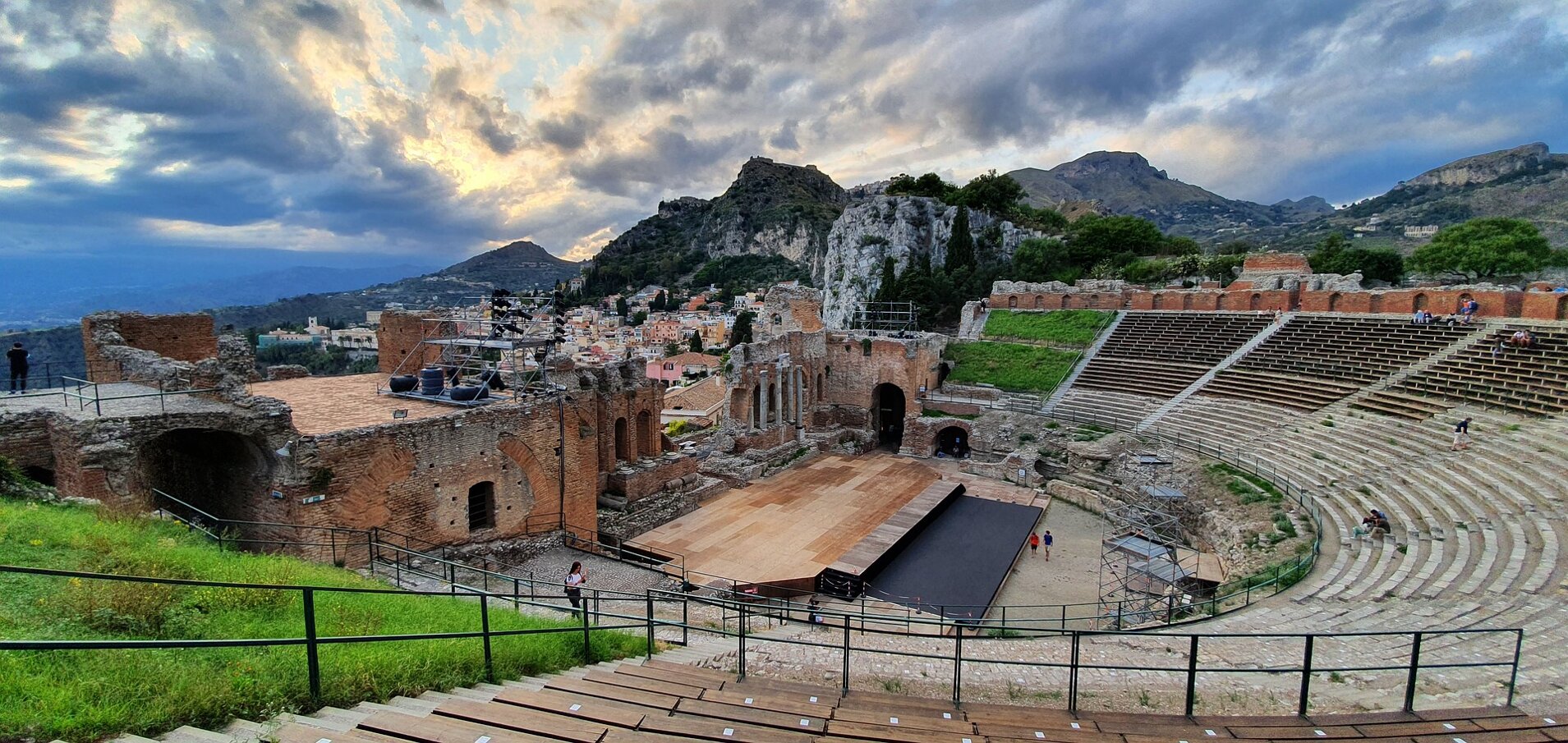
2026 Seasonal Opening Hours
The theater generally opens at 9:00 AM daily, with closing times shifting according to the following schedule:
| Period | Opening Hours |
| Jan 1 – Feb 15 | 9:00 AM – 4:00 PM |
| Feb 16 – Feb 28 | 9:00 AM – 4:30 PM |
| Mar 1 – Mar 15 | 9:00 AM – 5:00 PM |
| Mar 16 – Mar 31 | 9:00 AM – 5:30 PM |
| Apr 1 – Apr 30 | 9:00 AM – 6:30 PM |
| May 1 – Aug 31 | 9:00 AM – 7:00 PM |
| Sep 1 – Sep 15 | 9:00 AM – 6:30 PM |
| Sep 16 – Sep 30 | 9:00 AM – 6:00 PM |
| Oct 1 – Oct 15 | 9:00 AM – 5:30 PM |
| Oct 16 – Oct 31 | 9:00 AM – 5:00 PM |
| Nov 1 – Dec 31 | 9:00 AM – 4:00 PM |
- Last Entry: Typically permitted until 45 minutes before closing.
- Special Openings: On the first Sunday of every month, admission is free.
- Evening Events: During the summer (July–September), the theater often hosts evening concerts and operas, which may restrict access to certain areas during the day or offer separate night-time entry.
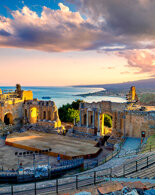
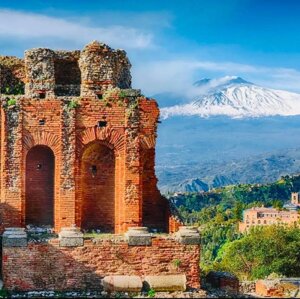
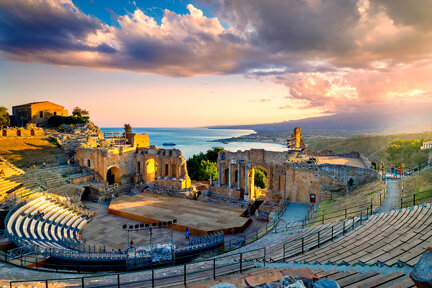
Ancient Theatre of Taormina, dating back to the 3rd century BC, is one of Taormina’s most iconic sights, with breathtaking views over the sea and Mount Etna. Tickets cost €9–16, and in summer the theatre comes alive with concerts and June film festival screenings. It typically opens at 9:00 AM and closes about an hour before sunset (hours vary by month). You can book your ticket and see additional information here.
Directions to the Villa Comunale
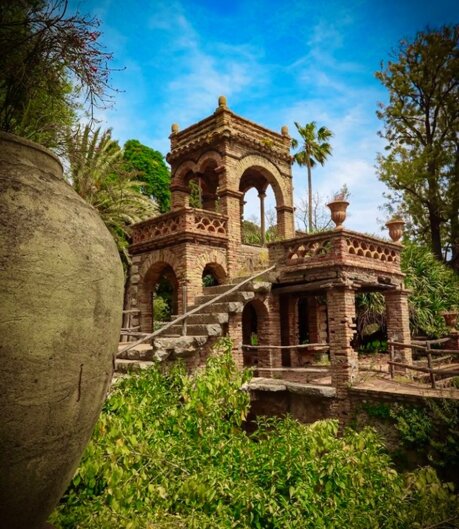
Trevelyan Park, Villa Comunale of Taormina, was built in the mid-19th century at the request of Lady Florence Trevelyan. She was an English noblewoman who was raised at the court of Queen Victoria and was the cousin of her grandmother, Lady Maria Wilson. Lady Florence was the daughter of wealthy parents, Edward Spencer Trevelyan and Catherine Ann Forster. In 1879, she began her long journeys through Europe and North Africa, but in February 1884, she was exiled from England on charges of having an affair with Queen Victoria's firstborn, the future King Edward VII, who was already married to Alexandra of Denmark.
Following her exile, Trevelyan settled in Taormina, where she married the mayor Salvatore Cacciola on July 13, 1890. Together, they purchased 87 lots of land and some old houses, which they razed to the ground to create the current Public Garden. Lady Florence died in 1907 and was buried at the top of Monte Venere, where she spent the last years of her life.
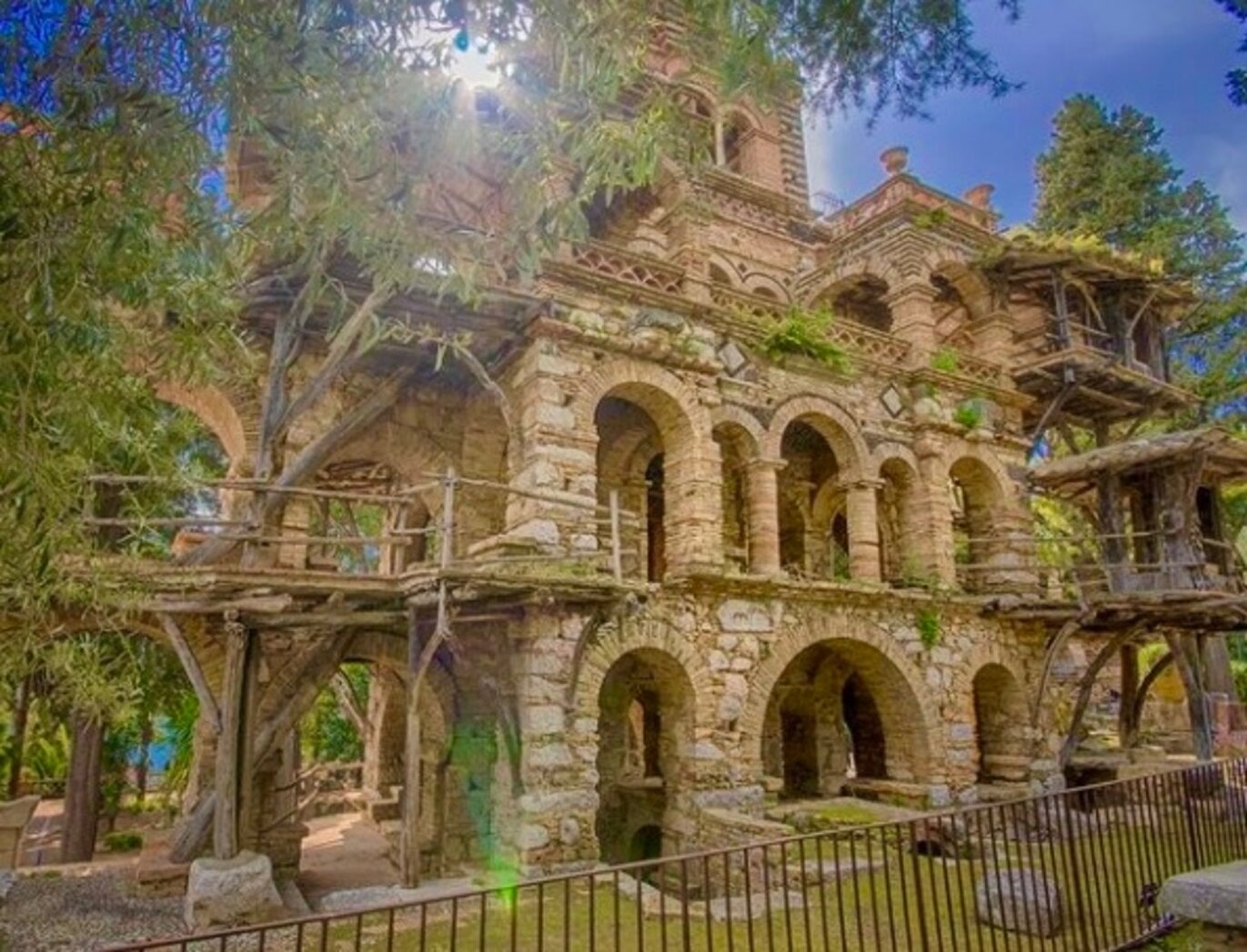
Trevelyan Park is a historic garden that covers an area of 22,400 m², with a length of 280 m and a maximum depth of approximately 70 m in the central part. The most interesting architectural elements of the Villa Comunale of Taormina are the ‘Victorian Follies’. These are eclectic-style buildings inspired by oriental architecture. Lady Florence designed and created them between 1890 and 1899, and they are also known as "the beehives" due to their particular shape. She used the Victorian Follies as a bird-watching station.
Back